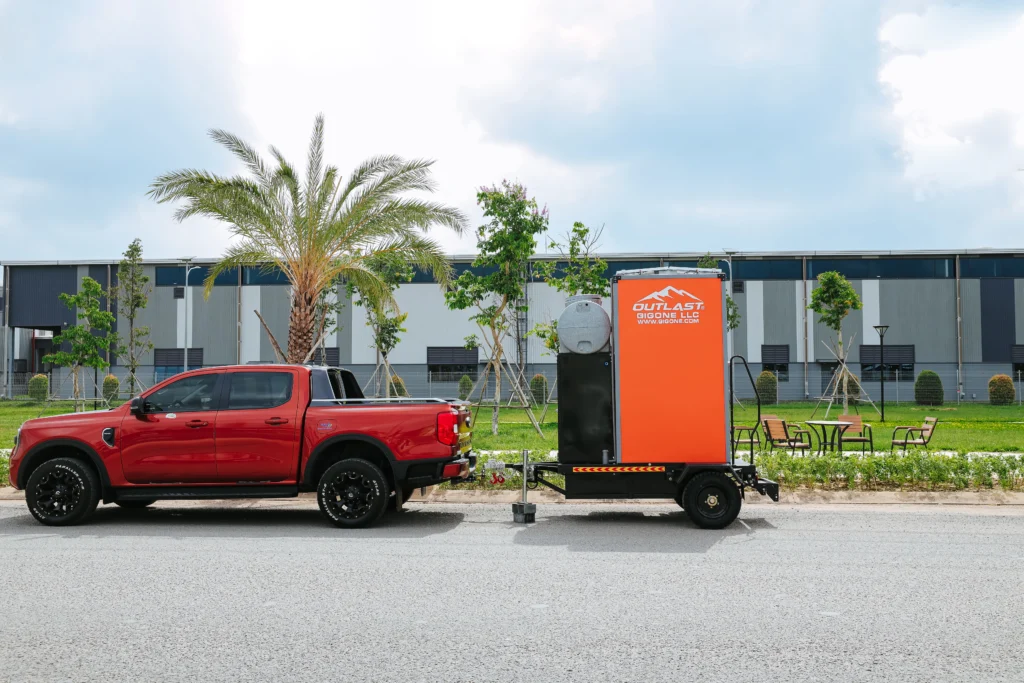

Premium Mobile Oasis™ – Models A-1P & AA-1P
In public sanitation, design determines reliability.
When sanitation systems are deployed in national parks, remote public lands, disaster recovery zones, or government-managed facilities, they must operate independently, safely, and continuously—often without access to grid power, fixed sewage, or permanent infrastructure.
Premium Mobile Oasis™ Models A-1P and AA-1P were engineered precisely for these environments. Both models share a fully enclosed mobile restroom system design, built to operate as stand-alone public infrastructure assets, ready for rapid deployment and long-term service.
This article examines how enclosure, independence, and deployment readiness define the core value of A-1P and AA-1P—and why these systems are increasingly selected for public service, B2G, and infrastructure-grade applications.
Table of Contents
1. Fully Enclosed Mobile Restroom System: Isolation from the External Environment
At the foundation of both A-1P and AA-1P is a fully enclosed structural design, separating the sanitation environment entirely from external conditions.
This enclosure provides:
- Protection from wind, rain, dust, snow, and extreme temperatures
- Controlled internal climate and hygiene conditions
- Increased user safety and privacy in public settings
Unlike open or semi-exposed portable toilets, fully enclosed systems behave more like mobile buildings than temporary equipment.
For public agencies and operators, this isolation is critical. It ensures:
- Consistent sanitation standards
- Reduced contamination risks
- Compliance with public health expectations
The enclosed design allows A-1P and AA-1P to function reliably in locations where environmental exposure would otherwise compromise sanitation quality.
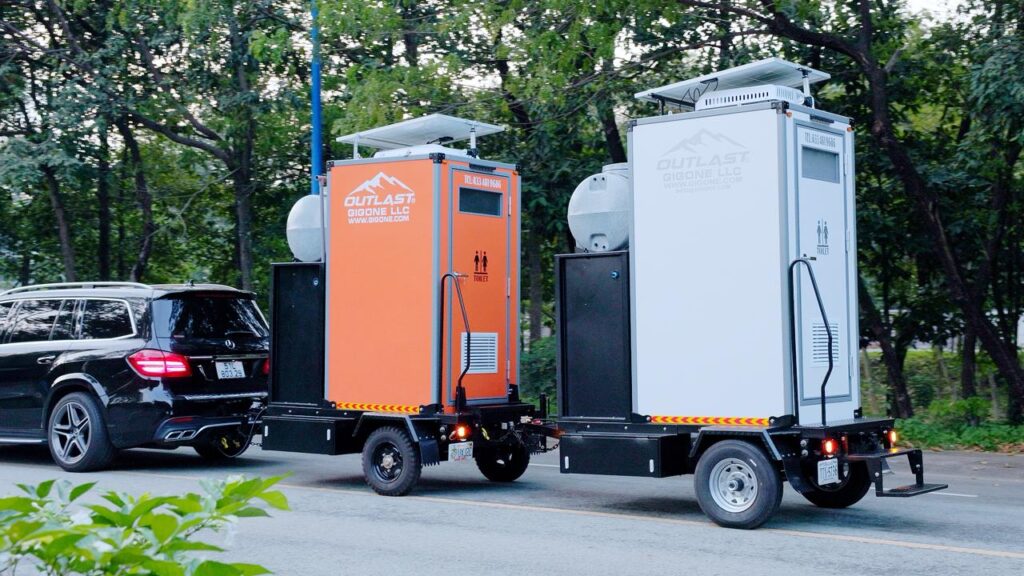
2. Independent Operation: No Fixed Infrastructure Required
One of the defining characteristics of a fully enclosed mobile restroom system is its ability to operate independently.
Both A-1P and AA-1P are engineered to function without reliance on:
- Grid electricity
- Permanent water connections
- Fixed sewage or drainage systems
This independence enables deployment in:
- Remote public lands
- Environmentally protected areas
- Temporary or rapidly changing sites
- Emergency and disaster response zones
For public operators, independence translates into deployment flexibility and operational autonomy—two factors that significantly reduce logistical complexity.
3. Purpose-Built for Public Service Environments
A-1P and AA-1P are not event-focused sanitation units. They are designed as public-service-oriented systems, suitable for continuous access by diverse user groups.
Common deployment environments include:
- National parks and protected public lands
- Remote federal or state-managed facilities
- Public health and sanitation service areas
- Emergency response and disaster recovery zones
In these contexts, sanitation systems must balance:
- Accessibility
- Reliability
- Environmental responsibility
- Minimal operator intervention
The design of both models reflects this balance, prioritizing public usability over temporary convenience.
4. Engineering for Continuous Public Use
Public sanitation systems face usage patterns that differ significantly from private or event deployments.
A-1P and AA-1P are engineered to support:
- High-traffic, shared public environments
- Continuous daily operation
- Varied user behavior and peak demand
This includes:
- Durable interior finishes
- Reinforced structural components
- Systems rated for repeated, long-term use
By engineering for continuous public access, Premium Mobile Oasis™ reduces wear-related failure and extends service intervals—key advantages for municipalities and public agencies managing limited maintenance resources.
5. Reliable Operation in Remote & Off-Grid Locations
Remote deployment is not an exception—it is a primary use case.
Both A-1P and AA-1P support multiple power configuration options, enabling off-grid operation in areas without utility access. These configurations are designed to maintain stable performance even when environmental conditions fluctuate.
Operational reliability in off-grid environments requires:
- Energy efficiency
- System redundancy
- Climate resilience
The fully enclosed structure supports these requirements by minimizing external interference and stabilizing internal operating conditions.
6. Deployment-Ready Architecture: Rapid, Repeatable, Scalable
Public agencies often require systems that can be:
- Deployed quickly
- Relocated efficiently
- Reused across multiple sites
A-1P and AA-1P are designed with deployment readiness in mind. Their architecture supports:
- Rapid setup without permanent site preparation
- Repeated deployment cycles across different locations
- Predictable performance regardless of site variability
This makes them suitable for:
- Seasonal public service programs
- Rotational park or facility coverage
- Emergency and disaster response staging
Deployment readiness reduces both time-to-service and total lifecycle cost.
7. Long-Term Public Infrastructure Asset
Unlike disposable or short-term sanitation solutions, A-1P and AA-1P are conceived as long-term public infrastructure assets.
Design characteristics supporting this role include:
- Structural durability for extended service life
- Simplified maintenance architecture
- Compatibility with long-term asset management strategies
Public sector buyers increasingly evaluate sanitation systems based on total cost of ownership, not initial purchase price. Long service life, predictable maintenance, and operational stability directly support this evaluation model.
8. Environmental Responsibility by Design
Environmental sensitivity is a core concern in many public deployment areas, particularly:
- National parks
- Protected ecosystems
- Water-sensitive regions
The independent, fully enclosed design helps:
- Prevent environmental contamination
- Reduce dependency on chemical treatments
- Minimize ground disturbance
By operating without permanent sewage connections and reducing chemical reliance, A-1P and AA-1P align with environmental stewardship objectives common to public agencies.
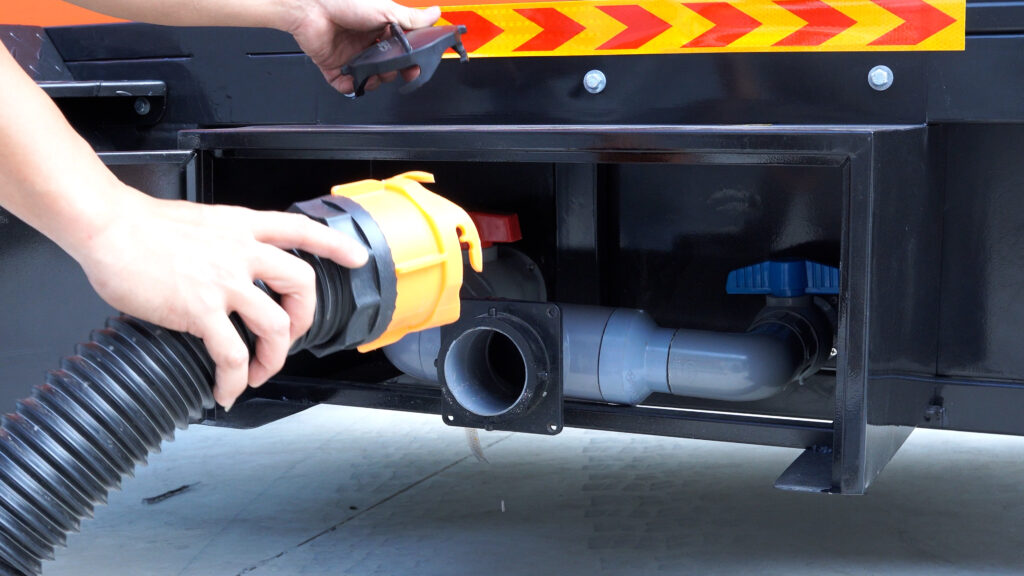
9. A-1P and AA-1P: Shared Design Philosophy, Different Scales
While both models share the same core design principles, they are optimized for different operational scales.
Model A-1P
- Compact, premium footprint
- Ideal for controlled public environments
- Efficient deployment where space and logistics matter
Model AA-1P
- Expanded capacity and resilience
- Designed for larger, more demanding deployments
- Suitable for extended operations and extreme conditions
Both models deliver the same fully enclosed, independent, deployment-ready architecture, allowing agencies and operators to scale solutions without changing standards.
10. Supporting Public Hygiene, Safety & Sanitation Objectives
At its core, a fully enclosed mobile restroom system must support public outcomes—not just technical performance.
A-1P and AA-1P contribute to:
- Improved public hygiene access
- Safer sanitation environments
- Reliable service continuity
These outcomes are essential in:
- Disaster recovery
- Rural and underserved regions
- High-traffic public destinations
By prioritizing engineering integrity and operational independence, both models support the broader mission of public sanitation.
Conclusion: Designed for Public Service, Not Temporary Use
Premium Mobile Oasis™ Models A-1P and Premium Mobile Oasis™ Models AA-1P redefine what a mobile restroom can be.
Through a fully enclosed structure, independent operation, and deployment-ready architecture, they function as mobile public infrastructure, not temporary stopgaps.
For government agencies, public service operators, and infrastructure-focused organizations, these systems offer:
- Reliability without fixed utilities
- Environmental responsibility
- Long-term operational value
In environments where sanitation access is critical—and failure is not an option—fully enclosed mobile restroom systems like A-1P and AA-1P are not optional. They are essential.