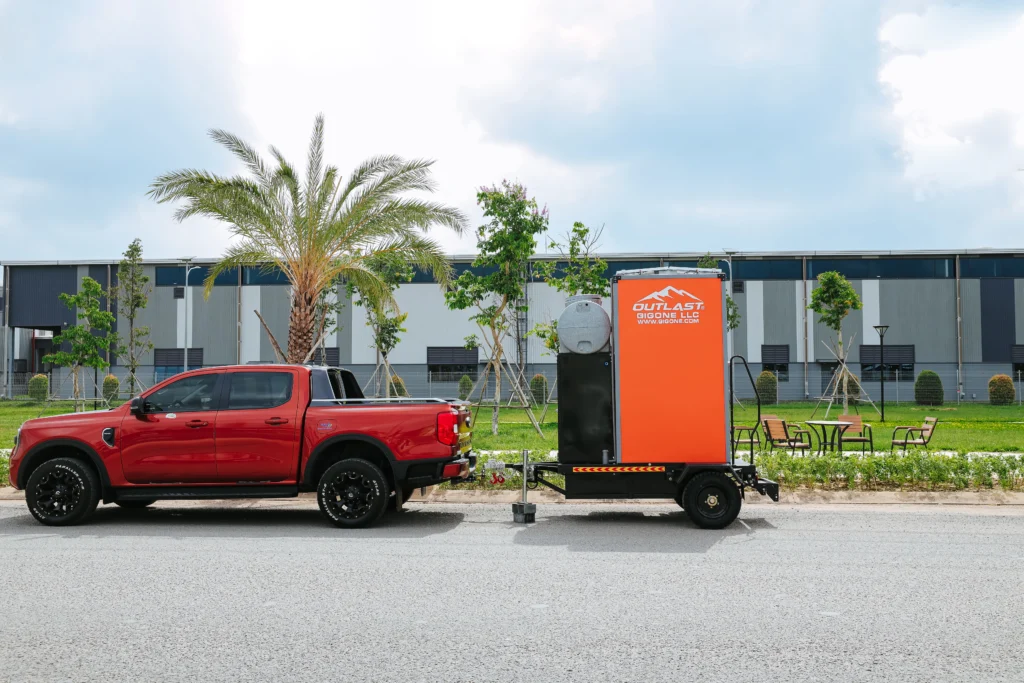

Inclusive Sanitation Solutions for Shared Public Environments
Public sanitation infrastructure plays a far greater role in community life than many realize. In modern shared environments—such as parks, event venues, tourist destinations, and urban public spaces—restrooms must serve not just individuals, but families, caregivers, and diverse user groups.
Mobile Oasis™ addresses this reality through a Family and Community-Focused Design, implemented across both Model AA-1P and Model A-1P. With the option to integrate a Baby Changing Station, these units are engineered to support inclusive, practical, and dignified restroom use in real-world public settings.
This article explores how family-oriented design enhances accessibility, improves user experience, and increases the long-term value of portable sanitation infrastructure.
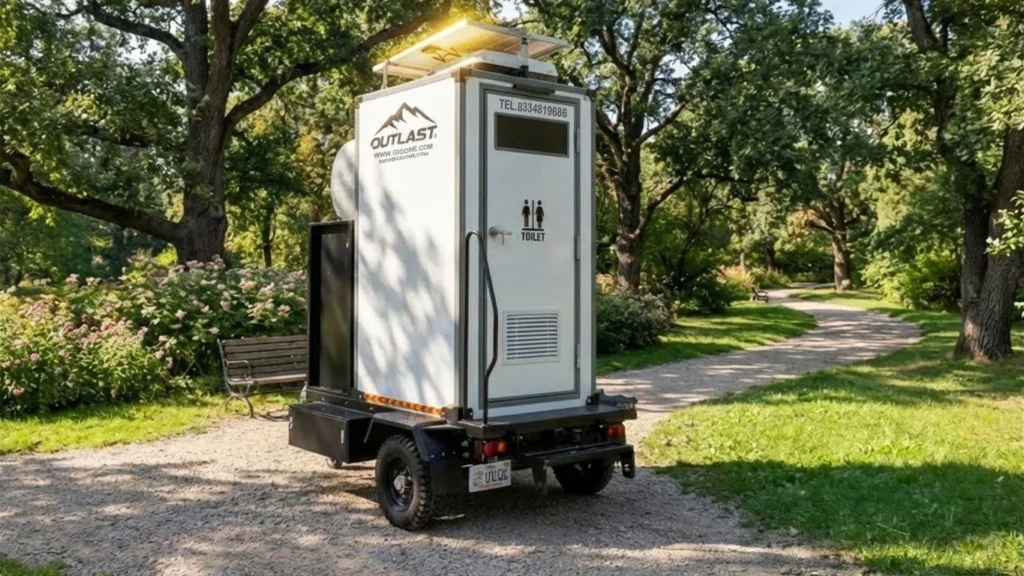
Table of Contents
Rethinking Portable Restrooms for Modern Communities
Traditional portable restrooms were designed around a single assumption: short-term, individual use. However, public environments today demand more. Modern deployment contexts include: Families spending extended time in public areas, Parents caring for infants and young children, Tourists navigating unfamiliar spaces, and Communities gathering for events and recreation.
In these situations, sanitation infrastructure must support shared use, comfort, and inclusivity. A community-focused portable restroom design recognizes these needs and responds with thoughtful features that go beyond minimum requirements.
Optional Baby Changing Station: Supporting Families with Dignity
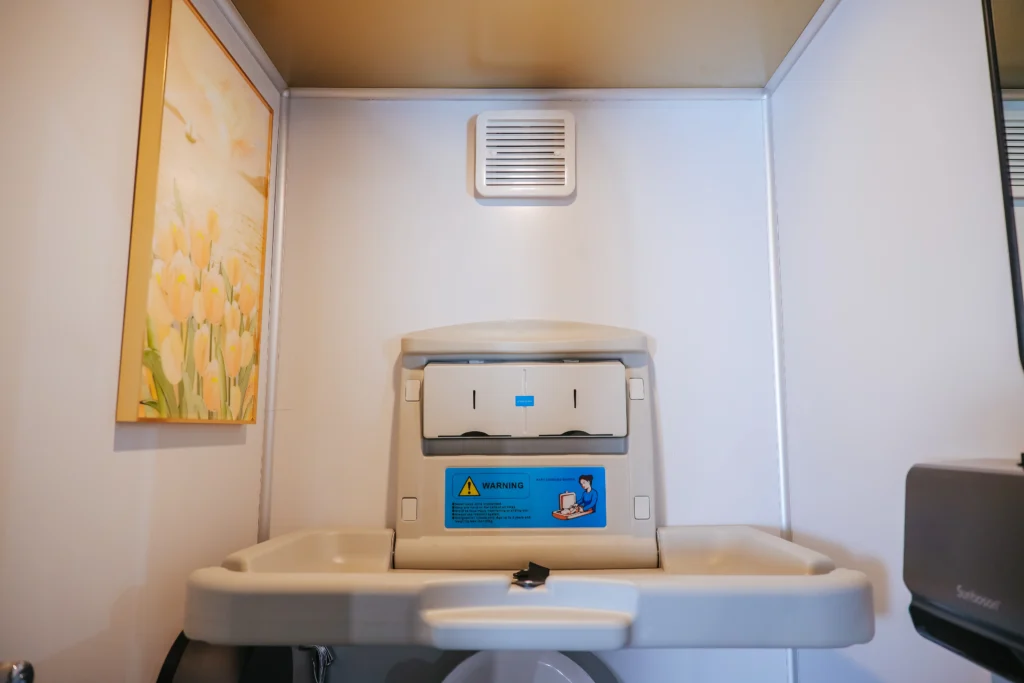
Both Mobile Oasis™ Model AA-1P and Model A-1P can be configured with an optional Baby Changing Station, designed to provide a safe, hygienic, and convenient solution for infant care in public environments. Key benefits include: Dedicated surface for baby care, reducing improvised use of sinks or countertops, Improved hygiene and cleanliness, Greater convenience for parents and caregivers, Reduced stress in high-traffic public locations.
This feature enables portable restrooms to serve families respectfully and efficiently, even in environments without permanent facilities.
Ideal Use Cases for Family-Focused Portable Restrooms
The integration of a baby changing station is particularly valuable in environments where families are a core user group.
Common deployment scenarios include: Large-scale public events and festivals, Parks and recreational spaces, Tourist destinations and attractions, Urban public spaces with extended dwell times. In these settings, family-friendly sanitation is not a luxury—it is an expectation.
By offering inclusive features, Mobile Oasis™ helps site operators and planners meet modern public-space standards while improving overall visitor satisfaction.
Community-Focused Design Goes Beyond a Single Feature
While the baby changing station is a visible symbol of inclusivity, family and community-focused design encompasses the entire user experience. Across both models, Mobile Oasis™ emphasizes: Fully enclosed restroom layouts for privacy, Clear interior organization for ease of use, Durable, easy-to-clean surfaces, and Lighting systems that support safe operation.
These elements work together to create a restroom environment that feels intentional, reliable, and suitable for shared public use.
Accessibility and Inclusivity in Shared Public Environments
Inclusive sanitation design supports a wide range of users, including: Parents with young children, Caregivers assisting dependents, Visitors unfamiliar with the site, and Community members of different ages.
By accommodating diverse needs within a single unit, Mobile Oasis™ portable restrooms contribute to equitable access without requiring multiple specialized facilities. For broader insight into inclusive design principles in public environments, organizations such as the World Bank highlight the importance of user-centered infrastructure planning.
Designed for Both Temporary and Long-Term Deployment
One of the defining advantages of Mobile Oasis™ systems is their suitability for both short-term and extended deployments. In long-term installations—such as seasonal parks, tourism zones, or ongoing public projects—family-oriented features deliver ongoing benefits: Reduced user complaints, Improved site reputation, Lower likelihood of misuse or damage, and better alignment with community expectations.
Rather than rotating temporary solutions, operators can deploy a restroom system designed to meet diverse needs from day one.
Enhancing Public Space Usability Through Thoughtful Sanitation
Sanitation infrastructure has a direct impact on how people experience a space. Clean, accessible, and inclusive restrooms encourage: Longer visits, Higher satisfaction, Repeat attendance, Positive word-of-mouth.
By integrating family-focused design elements, Mobile Oasis™ units support the broader usability of public environments—not just basic hygiene needs.
Flexible Configuration for Different Site Requirements
Not every deployment requires the same configuration. Mobile Oasis™ addresses this through modular and optional features, allowing planners to tailor each unit to site-specific needs. Possible configurations include: Standard public-use setup, Family-oriented setup with baby changing station, Mixed-unit deployments across larger sites. This flexibility ensures operational efficiency while maintaining consistent quality and design standards.
Durable Construction for High-Use Public Settings
Family-oriented features must withstand frequent use and routine maintenance. Mobile Oasis™ designs its interior components—including baby changing stations—with durability in mind. Key considerations include: Robust mounting and secure installation, Materials compatible with regular cleaning, and resistance to wear in high-traffic environments.
This ensures that inclusive features remain reliable throughout the unit’s service life.
Supporting Community Trust Through Design Quality
Public-facing infrastructure reflects how much care has gone into planning a space. When sanitation systems are clearly designed for real users, communities notice. Family & community-focused portable restrooms help convey that: User needs were anticipated, Public comfort is valued, Facilities are professionally planned.
This contributes to trust, acceptance, and long-term success in shared environments.
From Portable Restroom to Community Infrastructure Asset
By integrating inclusive design features, Premium Mobile Oasis™ portable restrooms transition from being temporary utilities to becoming functional infrastructure assets. Across Premium Mobile Oasis™ Model AA-1P and Premium Mobile Oasis™ Model A-1P, family-focused design supports: Families and caregivers, Community gatherings, Public-space usability, and Modern sanitation expectations.
This approach reflects a broader shift in how portable sanitation is designed, deployed, and evaluated.
Conclusion: Inclusive Design Creates Sustainable Public Value
Family and community-focused portable restroom design is an essential component of modern portable sanitation. It reflects how public spaces are used and how communities expect to be supported. With optional baby changing stations and a broader commitment to inclusive usability, Premium Mobile Oasis™ portable restrooms deliver solutions that serve families, caregivers, and diverse user groups with dignity and reliability.
For planners and operators seeking family-friendly, community-oriented portable sanitation, Model AA-1P and Model A-1P offer a forward-looking approach designed for today’s shared public environments.